



 English
 中文简体
中文简体Content
In the complex electrical systems of modern automobiles, automotive relays play an indispensable role. With the increasing intelligence of vehicles and the surge in the number of electronic devices, understanding the working principle and necessity of this core component is important for both car owners and maintenance technicians.
What is an Automotive Relay?
Simply put, an automotive relay is a "small-scale control" automatic switch. It uses a small current to control the switching of a larger current in a circuit. You can think of it as a relay station in the electrical system, protecting the fragile control switch from being burned out by high-voltage current.
How Automotive Relays Work
Automotive relays operate primarily based on the principle of electromagnetic induction. Their core structure typically consists of an iron core, coil, armature, and contact return spring.
Coil Energized: When the driver operates the switch (such as pressing the horn or turning on the headlights), a small current flows through the relay's internal coil.
Magnetic Field Generated: The energized coil generates a magnetic field, attracting the armature above.
Contact Closure: The movement of the armature causes the contacts to close, thus connecting the high-current circuit on the load side.
Power-off reset: When the switch is turned off, the coil's magnetic field disappears, the spring pulls the armature back to its original position, and the high-current circuit is broken.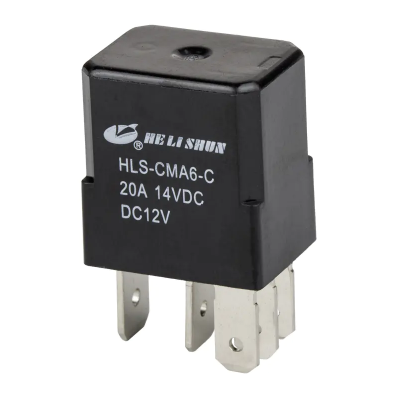
Why do cars need relays?
Without automotive relay devices, the electrical systems of modern cars would be unsustainable. Here are their core values:
1. Protecting switches and wiring harnesses: Car headlights, radiator fans, or starters typically require tens of amps of current. If this high current were to pass directly through the precision switches on the dashboard, the switches would overheat and burn out quickly. Relays keep the high current within the engine compartment, while the switches only send signals.
2. Enabling remote control and automation: Relays allow for remote control through thin wires. Furthermore, the signal current output from the onboard computer (ECU) is very weak and cannot directly drive high-power devices; automotive relays are necessary as an intermediary for automated operation.
3. Energy saving and weight reduction: Using relays optimizes circuit layout, reduces the length of thicker, more expensive cables, thereby reducing overall vehicle weight and improving energy efficiency.
Common Types of Automotive Relays
In practical applications, you will encounter several types of relays:
- Normally Open: The circuit is only connected when the coil is energized.
- Normally Closed: The circuit is disconnected when the coil is energized.
- Changeover: Equipped with multiple sets of contacts, it can switch between two circuits.
Automotive relays are masterpieces of automotive electrical engineering. They resolve the conflict between high-energy-consuming devices and microelectronic control through a simple physical mechanism. Whether it's brake lights ensuring driving safety or air conditioning systems enhancing comfort, this small yet powerful component is indispensable.
Q1: What are the symptoms of a faulty automotive relay?
A: The most common symptoms include: related electronic equipment (such as headlights and horns) completely malfunctioning; the device continuing to operate after being turned off (contacts sticking together); or a continuous "clicking" noise when the switch is turned on.
Q2: How to determine if a automotive relay is working properly?
A: You can use a multimeter to measure the coil resistance, or listen for a clear "click" sound when energized. A more professional approach is to check the contact resistance after the contacts are closed. If the resistance is too high, it indicates that the internal contacts have been burned or oxidized.
Q3: Can I replace the car relay myself?
A: Yes. Most car relays are located in the fuse box and use a plug-in design. Before replacing, ensure the vehicle is powered off and be sure to choose a replacement part that is exactly the same as the original factory specification (voltage, current, pin definitions).
For reliable performance and safety, choosing a high-quality automotive relay that meets automotive standards is essential.


