



 English
 中文简体
中文简体Content
- 1 Core Function: Switching and Circuit Isolation
- 2 Industrial Machinery and Automation
- 3 HVAC and Building Automation Systems
- 4 Automotive and Vehicle Electrical Systems
- 5 Home Appliances and Consumer Electronics
- 6 Power Relay Contact Configurations and What They Enable
- 7 Energy Management and Load Shedding
- 8 Telecommunications and Signal Distribution
- 9 Key Specifications to Match Relay to Application
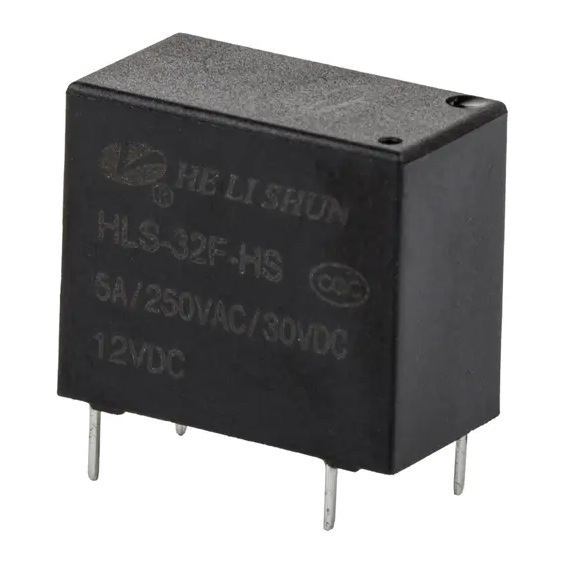
General power relays are used to switch electrical loads on and off using a low-power control signal, enabling one circuit to safely control another. They are found in industrial machinery, HVAC systems, automotive electronics, home appliances, and building automation — anywhere that requires isolation between a control circuit and a high-power load circuit. A single general power relay can switch loads ranging from 10A to 30A at voltages up to 277V AC, making it one of the most versatile switching components in electrical engineering.
Core Function: Switching and Circuit Isolation
The fundamental job of a general power relay is to act as an electrically operated switch. When a low-voltage control signal (typically 5V DC, 12V DC, or 24V DC) energizes the relay coil, it generates a magnetic field that physically moves a set of contacts. Those contacts open or close a separate, higher-power circuit — without any direct electrical connection between the two.
This isolation serves two critical purposes:
- Protection — sensitive control components like microcontrollers or PLCs never come into contact with high-voltage load circuits.
- Amplification — a signal drawing just a few milliamps can control a load drawing 20A or more.
Industrial Machinery and Automation
In industrial environments, general power relays are among the most frequently deployed components. They serve as the interface between programmable logic controllers (PLCs) and the motors, solenoids, heaters, and actuators those controllers manage.
- Motor starter circuits — relays pre-switch control power before a contactor engages a motor, reducing inrush stress on control boards.
- Conveyor and packaging systems — relay logic sequences the activation and deactivation of drive motors, stoppers, and pneumatic valves along production lines.
- Alarm and interlock systems — a relay wired in a normally-closed (NC) configuration automatically cuts power to a machine if a safety condition is violated, such as an open guard door or overtemperature signal.
In a typical mid-size automated assembly cell, it is common to find 20 to 60 general power relays installed on DIN-rail mounted relay sockets within a control cabinet.
HVAC and Building Automation Systems
Heating, ventilation, and air conditioning systems rely on general power relays to translate low-voltage thermostat or building management system (BMS) signals into the switching of high-voltage fan motors, compressors, and electric heating elements.
Typical HVAC Relay Applications
- Fan coil unit control — a 24V AC signal from a room thermostat triggers a relay that switches 230V AC to the blower motor.
- Economizer damper actuators — relays control the motorized dampers that regulate outside air intake based on temperature and CO₂ sensors.
- Electric duct heaters — staging relays switch heating elements on sequentially to prevent voltage sags caused by large simultaneous inrush currents.
- Pump and chiller enable circuits — BMS output signals energize relays that permit chilled water pumps to start only when zone demand is confirmed.
Automotive and Vehicle Electrical Systems
Modern vehicles use multiple general power relays to manage high-current loads from a central fuse and relay box, keeping wiring simple and protecting the vehicle's body control module (BCM) from high-current surges.
- Fuel pump relay — the ECU sends a low-current signal to the relay, which then closes the high-current circuit to the fuel pump (typically drawing 5–15A).
- Cooling fan relay — switches the radiator fan motor on when coolant temperature exceeds a set threshold, without routing high current through the ECU.
- Starter relay — handles the very high inrush current (up to 200A) required to crank the engine, triggered by the ignition key signal.
- Accessory power relay — controls power to non-essential loads (audio systems, USB ports, lighting) and cuts them when the ignition is off to prevent battery drain.
Home Appliances and Consumer Electronics
Many everyday household appliances use general power relays internally to switch heating elements, motors, and compressors under microcontroller direction.
- Washing machines — relays switch the drum motor, pump motor, and heating element independently based on cycle programming.
- Refrigerators — a relay controls the compressor motor startup; some designs use a current-type relay to disconnect the start winding once the motor reaches operating speed.
- Microwave ovens — separate relays control the magnetron high-voltage transformer, turntable motor, and cooling fan, allowing each to be independently sequenced.
- Smart home devices — relay modules in smart plugs and panels allow IoT control systems to switch standard AC loads remotely via Wi-Fi or Zigbee commands.
Power Relay Contact Configurations and What They Enable
The contact arrangement of a relay determines what switching functions it can perform. Understanding these configurations helps in selecting the right relay for a specific application.
| Contact Type | Description | Typical Application |
|---|---|---|
| SPST-NO | Single Pole Single Throw, Normally Open | Simple on/off load switching (lights, heaters) |
| SPST-NC | Single Pole Single Throw, Normally Closed | Safety interlocks, fail-safe shutdown circuits |
| SPDT | Single Pole Double Throw | Changeover between two circuits (selector switching) |
| DPDT | Double Pole Double Throw | Motor direction reversal, dual-circuit switching |
| 4PDT | Four Pole Double Throw | Multi-circuit control panels, complex automation logic |
Energy Management and Load Shedding
General power relays are increasingly used in energy management systems to automatically shed non-critical loads during peak demand periods, reducing electricity costs and preventing grid overload.
- Demand response programs — utility-connected systems use relays to cycle off water heaters, pool pumps, and supplemental HVAC units when grid demand peaks, typically reducing a facility's peak demand charge by 10–20%.
- Solar and battery storage systems — relays manage the switching between grid power, solar generation, and battery bank output, ensuring seamless transitions without interruption to critical loads.
- Generator transfer switching — when mains power fails, relays in an automatic transfer switch (ATS) disconnect the building from the grid and connect the generator, typically completing the transfer in under 10 seconds.
Telecommunications and Signal Distribution
In telecommunications infrastructure, general power relays switch power feeds to remote radio units, antenna systems, and network equipment housed in outdoor enclosures or remote cabinets.
- Remote power cycling — network operations centers use relay-equipped power distribution units (PDUs) to remotely reboot hung equipment without dispatching a technician on site.
- Antenna changeover — relays switch transmitters between primary and backup antennas during maintenance or fault conditions.
- UPS bypass circuits — relays in uninterruptible power supplies route load power around the inverter during maintenance, keeping equipment live without exposing technicians to inverter output.
Key Specifications to Match Relay to Application
Selecting the wrong relay specification for an application is a leading cause of premature relay failure and system downtime. The following parameters must always be matched to the actual load:
- Coil voltage — must match the control circuit voltage exactly (e.g., 12V DC, 24V AC). Applying the wrong coil voltage causes either failure to energize or coil burnout.
- Contact current rating — the relay's contact must be rated for the load's full running current, plus a derating factor. A common rule is to use a relay rated for at least 125% of the expected load current.
- Resistive vs. inductive load rating — motor and solenoid loads are inductive and generate voltage spikes that erode contacts faster. Always check the relay's inductive load (AC-3 or AC-15) rating separately from its resistive rating.
- Mechanical and electrical life — general power relays are typically rated for 10 million mechanical operations and 100,000 to 500,000 electrical operations under full load. High-cycle applications may require solid-state relays instead.
- Operating temperature range — relays used in outdoor enclosures or near heat sources must be rated for the ambient temperature range of the installation, commonly -40°C to +85°C for industrial-grade components.


