



 English
 中文简体
中文简体Content
- 1 Core Uses and Technological Advantages of PCB Power Relays
- 2 1. High-Reliability Circuit Isolation and Safety Protection
- 3 2. Precise Control of High-Power Loads
- 4 3. Flexibility and Versatility of Circuit Control
- 5 Key Indicators Affecting PCB Power Relay Performance
- 6 Key Components for Enhancing System Reliability
- 7 Frequently Asked Questions (FAQ)
- 8 1. What is the difference between a PCB power relay and a regular relay?
- 9 2. What is the core purpose of a PCB power relay in a circuit?
- 10 3. What are the most critical parameters when selecting a PCB power relay?
- 11 4. Why can PCB power relays improve system safety?
- 12 5. Besides household appliances, in which other fields are PCB power relays widely used?
In modern industrial automation, intelligent devices, and home appliances, power control and safety isolation are the cornerstones of circuit design.
Core Uses and Technological Advantages of PCB Power Relays
A PCB power relays (Printed Circuit Board Power Relay) is an electromagnetic relay designed for direct mounting on a printed circuit board. Compared to miniature signal relays, it has a larger contact capacity and stronger withstand capability, primarily used to control high-current power circuits.
Its core uses and technological advantages are mainly reflected in the following aspects:
1. High-Reliability Circuit Isolation and Safety Protection
This is the basic function of a relay. It allows the use of low-voltage, low-current control signals (such as the output of a microcontroller or logic circuit) to drive and switch high-voltage, high-current load circuits.
Separation of Strong and Weak Currents: Effectively isolates the control terminal (weak current) from the execution terminal (strong current), protecting sensitive electronic components from high-voltage or current surges and improving system safety.
Surge Resistance: High-quality PCB power relays have excellent insulation performance and arc resistance, capable of stably withstanding current surges generated during load startup.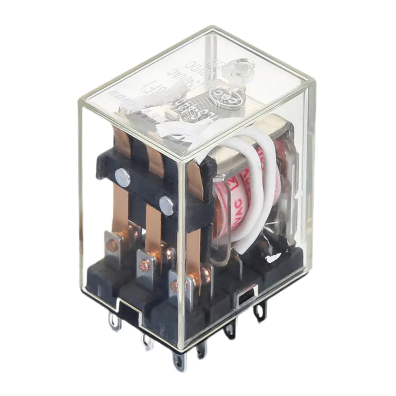
2. Precise Control of High-Power Loads
PCB power relays are an irreplaceable choice in applications requiring frequent switching or remote control of high-power equipment.
Application Areas: Widely used in high-current switching scenarios such as air conditioning systems, heaters, motor control, lighting systems, and uninterruptible power supplies (UPS).
High-Efficiency Switching: The mechanical contacts of the relay ensure extremely low contact resistance in the conducting state, thereby achieving high-efficiency power transmission and switching.
3. Flexibility and Versatility of Circuit Control
Through different contact configurations of the relay (such as normally open (NO), normally closed (NC), or changeover contacts (C)), design engineers can implement complex control logic and fault protection mechanisms.
Key Indicators Affecting PCB Power Relay Performance
When selecting a high-performance PCB power relay, the following core parameters should be given special attention, as they directly determine the reliability and lifespan of the relay in practical applications:
Contact Rating: This is the maximum combination of current and voltage that the relay can safely switch and carry. This is the primary standard for evaluating whether a PCB power relay is suitable for a specific high-power load.
Electrical and Mechanical Life Expectancy: Electrical life refers to the number of times a relay can reliably switch under rated load; mechanical life refers to the number of operations under no-load conditions. Long-life relays significantly reduce product maintenance costs.
Coil Power: Lower coil power consumption helps improve power efficiency, especially crucial in battery-powered or heat-sensitive equipment.
Key Components for Enhancing System Reliability
As electronic products become increasingly integrated, the reliability requirements for components are also rising. High-quality PCB power relays, with their stable switching characteristics and reliable current carrying capacity, have become an indispensable component in various high-reliability systems (such as industrial control cabinets, medical equipment power supplies, and new energy vehicle charging stations).
As the core bridge for power control and signal isolation, the performance of PCB power relays directly affects the safety and stability of the entire electronic system. Understanding their applications and technical details is a key step for every hardware engineer and purchasing personnel to ensure product quality. Choosing PCB power relays that meet international standards and have a long electrical life is an effective way to enhance your product competitiveness.
Frequently Asked Questions (FAQ)
1. What is the difference between a PCB power relay and a regular relay?
Short Answer: PCB power relays are directly mounted on PCBs. The main difference is that they have higher rated load on the contacts and are specifically designed for switching high-current power circuits.
2. What is the core purpose of a PCB power relay in a circuit?
Short Answer: The core purpose is to achieve strong and weak current isolation and precise control of high-power loads, using low-voltage signals to safely control high-voltage circuits.
3. What are the most critical parameters when selecting a PCB power relay?
Short Answer: The most critical parameters include: rated load on the contacts, electrical and mechanical lifespan, and coil voltage.
4. Why can PCB power relays improve system safety?
Short Answer: They isolate high-voltage load circuits from low-voltage control circuits, protecting sensitive components from high-current surges.
5. Besides household appliances, in which other fields are PCB power relays widely used?
Short Answer: Widely used in high-current switching scenarios such as industrial automation, UPS power supplies, new energy charging piles, and motor control.


